
SHARK DEPREDATION IN
THE PACIFIC ISLANDS
OBSERVATIONS. SCIENCE. SOLUTIONS.
Shark interactions are increasing across the Pacific Islands, impacting livelihoods, food security, and fishing practices. This project brings together fisher knowledge, science, and innovation to understand and reduce depredation.
THE PROBLEM
What is Shark Depredation?
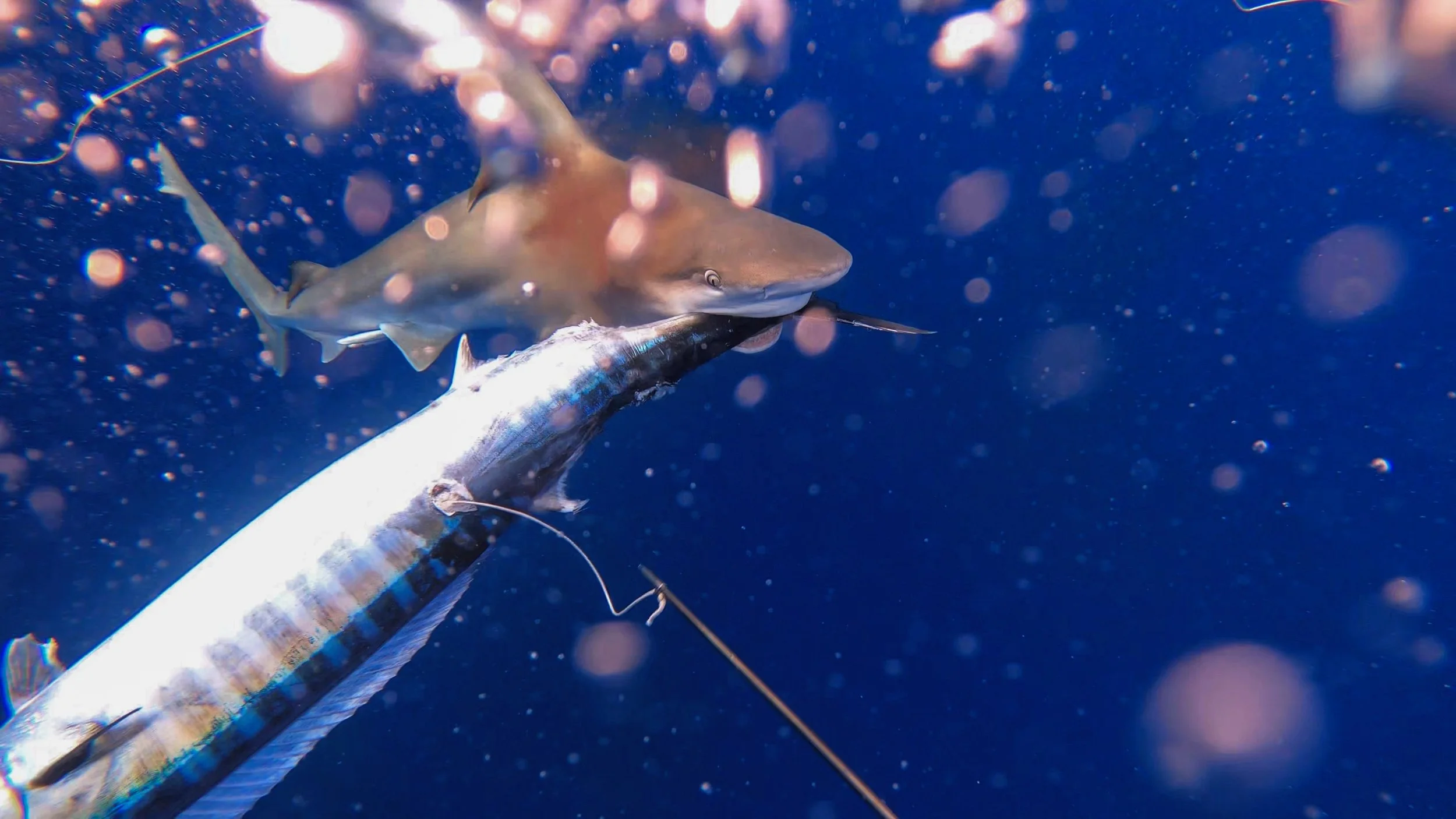
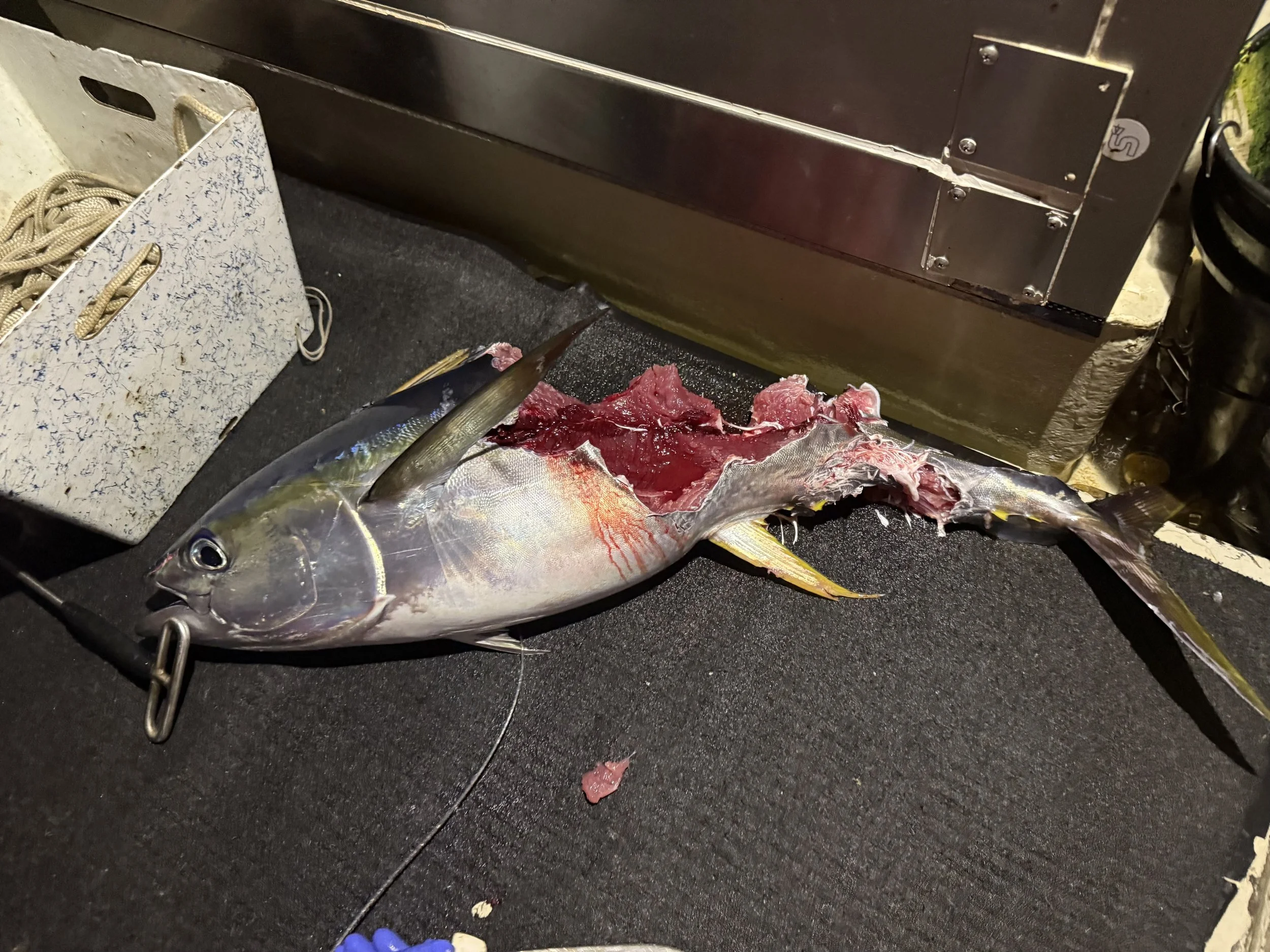
Shark depredation occurs when sharks remove catch completely or partially on fishing gear before it can be retrieved. Fishers across the Pacific Islands report that depredation is increasing, causing significant losses and changes to how and where they fish.
Fishers report losing up to 50% of catch to sharks
Depredation rates have increased from ~32–52% to ~42–61% of trips experiencing depredation in past decade based on reported data. Division of Aquatic Resources
Impacts small-boat fisheries
ON-GOING WORK
Recording and mapping traditional knowledge of high shark bycatch interaction to reduce take in the Pacific Islands
Pacific Islands Fisheries Group in 2025 initiated a cooperative research project under NOAA’s Bycatch Reduction Engineering Program (BREP) to assist the pacific islands fishers with recording the knowledge, interactions, and lessons in order to help reduce shark depredation and bycatch of sharks in the local island fisheries. This work specifically looked at both historical mitigation measures as well as new ones to help new entrants and fishers experiencing shark depredation learn good practices versus continuing to experience depredation.
How We are Achieving This Goal:
Hosting 6 listening sessions with fishers
Developing a list of mitigation measures
Conducting a public outreach campaign on best practices and lessons learned
Our Outcomes:
A story map showcasing mitigation measures and the history of shark depredation in the region.
A list of mitigation measures from fishers from across the region.
On-going discussions and strategies to help new entrants learn best practices and reduce shark bycatch.
Preliminary Results & Recommendations
Through our public listening sessions and discussions with fishers, as well as review of historical data we have achieved preliminary results and recommendations that we want to ensure the fishing community knows about and can access. These include 9 mitigation measures and strategies - some known and some less common on reducing depredation.
What fishers are observing
Shark depredation is worse than ever
Sharks are trained to the boats and show up before you even put bait in the water
Sharks are attacking hooked fish more frequently
Aggressive behavior is occurring with spear fishers.
What history tells us
Sharks were respected and also harvested across the pacific islands region.
The peak in shark landings in our region occurred in 1998, 99,910 sharks caught between longline, troll, and bottom fishers.
Sharks were utilized as a food source, medicine, and for cultural importance including ceremonies, gifts, and instruments.
What actions fishers feel can help
A code of conduct on how to deal with and operate around sharks.
Culling of aggressive sharks
Clarifying what fishers are and not allowed to do.
Mitigation Measures
PIFG Conducts Cooperative Research in support of the Pacific Islands, Federal and State Fisheries Management with a vision and mission to support the sustainability of Hawaii’s fisheries and fishers’ culture and way of life. Some of the projects are listed below. This project is funded by NOAA’s Bycatch Reduction Engineering Program under award contract: NA25NMFX472C0087-T1-01